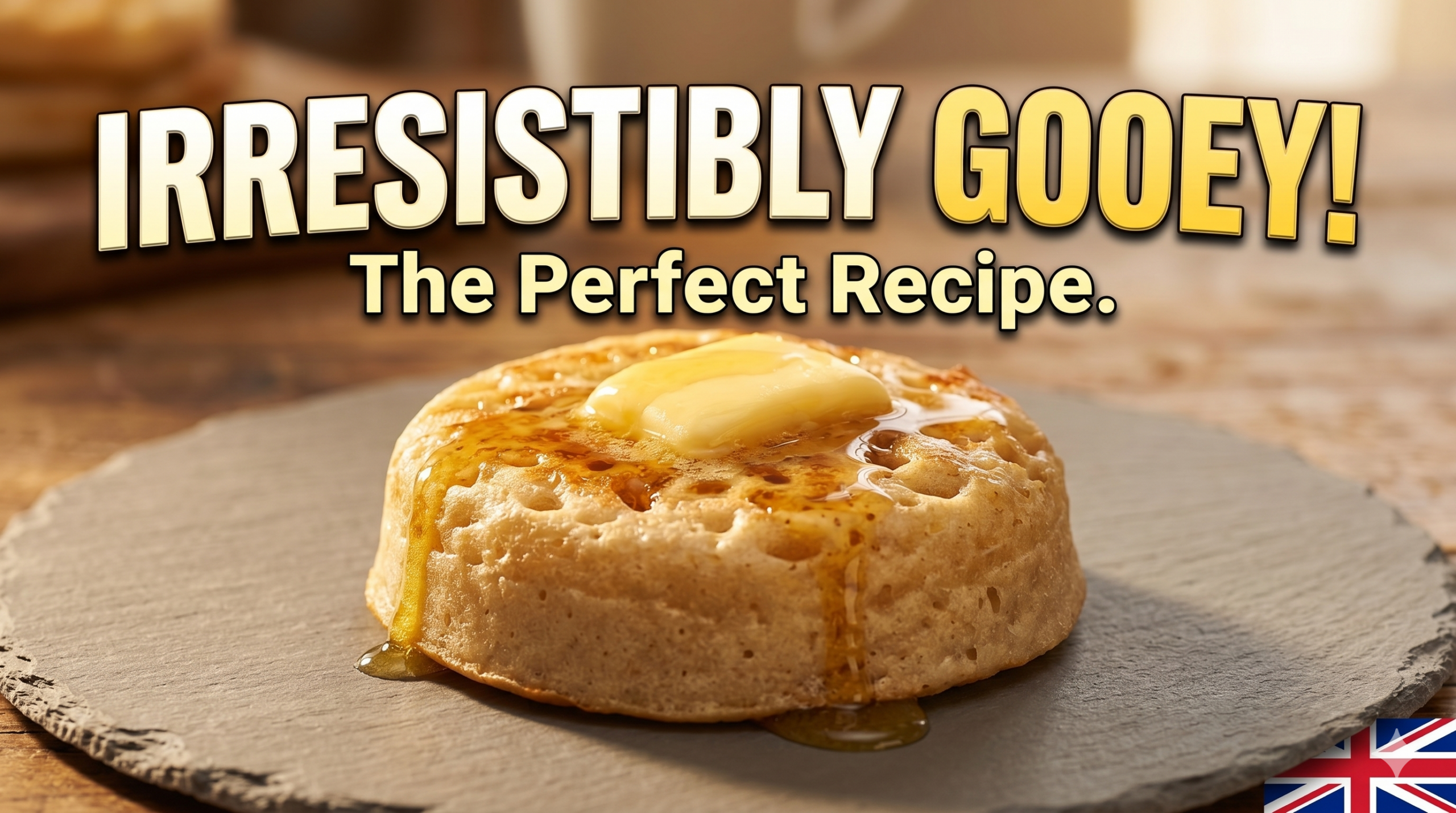
Crumpets
The humble crumpet is an absolute pillar of British teatime. It is a unique hybrid of a pancake and a yeast bread, loved entirely for its spongy texture and its uncanny ability to hold its own weight in melted butter.But the perfectly round, hole-filled crumpet we know today took centuries of evolution to get here.
A Bite-Sized History
1. The Early Days: Flat and Hard
The word "crumpet" likely comes from the old English word crompid (meaning curved or bent) or the Celtic crempog (a type of thin pancake). The earliest versions, dating back to the 14th century, weren't the fluffy, spongy rounds we eat today. They were flat, hard griddle cakes made from flour, milk, and eggs, cooked on a hot stone or a bakestone.2. The Victorian Evolution: The Magic of Yeast
It wasn't until the Victorian era that the crumpet underwent its biggest transformation. Victorian bakers began experimenting with adding yeast to the loose batter, alongside a vital addition: bicarbonate of soda.The chemical reaction from the bicarb created gas bubbles that rose through the thick batter as it cooked, creating the signature vertical tunnels. To stop the loose batter from spreading into a messy pancake across the hot griddle, bakers began cooking them inside metal rings—and the modern crumpet was officially born.5 Fascinating Facts About the Crumpet
The Bottom is Smooth, the Top is Hole-y: Unlike English muffins, which are split in half and toasted on both sides, crumpets are only cooked on one side during the manufacturing process. The bottom remains smooth and sealed, while the top pops with bubbles. When you toast a crumpet, you are essentially finishing the cooking process and crisping up the base and edges.The Anatomy of a Perfect Pour: The holes aren't just a byproduct; they are the entire point. In the food industry, these are referred to as the crumpet's "chimneys." They act as a capillary system, drawing melted butter straight down from the top surface into the core of the dough without letting it leak straight through the sealed bottom.Crumpets vs. Pikelets: In regions like Lancashire, Yorkshire, and the Midlands, you will often find pikelets. Historically, a pikelet is simply a crumpet made without the containment of a metal ring. The batter is dropped straight onto the griddle, resulting in a thinner, wider, more free-form pancake with holes, which is slightly heavier but just as delicious.The "Crumpet Man" of London: In the 19th and early 20th centuries, crumpets were street food. "Crumpet men" walked the streets of British towns and cities during the winter months, wearing large wooden trays on their heads loaded with fresh crumpets and muffins, ringing a handbell to summon hungry households to their doorsteps.The Ultimate War-Time Comfort: During the Blitz in World War II, crumpets became a symbol of resilience. Because they required very simple ingredients (flour, water/milk, yeast, salt), they could still be made during strict rationing, providing a rare, comforting treat to families huddled around coal fires.The Golden Rule of Eating a Crumpet: It must be toasted until the rim is distinctly crunchy, and it requires far more butter than you think is socially acceptable. It should essentially weep butter when bitten.Ingredients
- 75 g Plain flour
- 75 g Strong flour
- 200 ml Water
- 1 tsp Salt
- 1 tsp sugar
- 1 tsp Baking powder
- 1 tsp Dried yeast
- 1 tsp Water (for the yeast mix)
Instructions
- Whisk the base: Whisk the flour, water, and salt together for 2 minutes (or 1 minute on speed 5 with an electric mixer) to develop the gluten.
- Activate & combine: Dissolve the yeast in 1 tbsp of warm water. Add it to the bowl along with the sugar and baking powder, then whisk for another 30 seconds.
- The Proof: Cover the bowl and leave it in a warm place for 30 minutes to an hour until the surface is beautifully foamy.