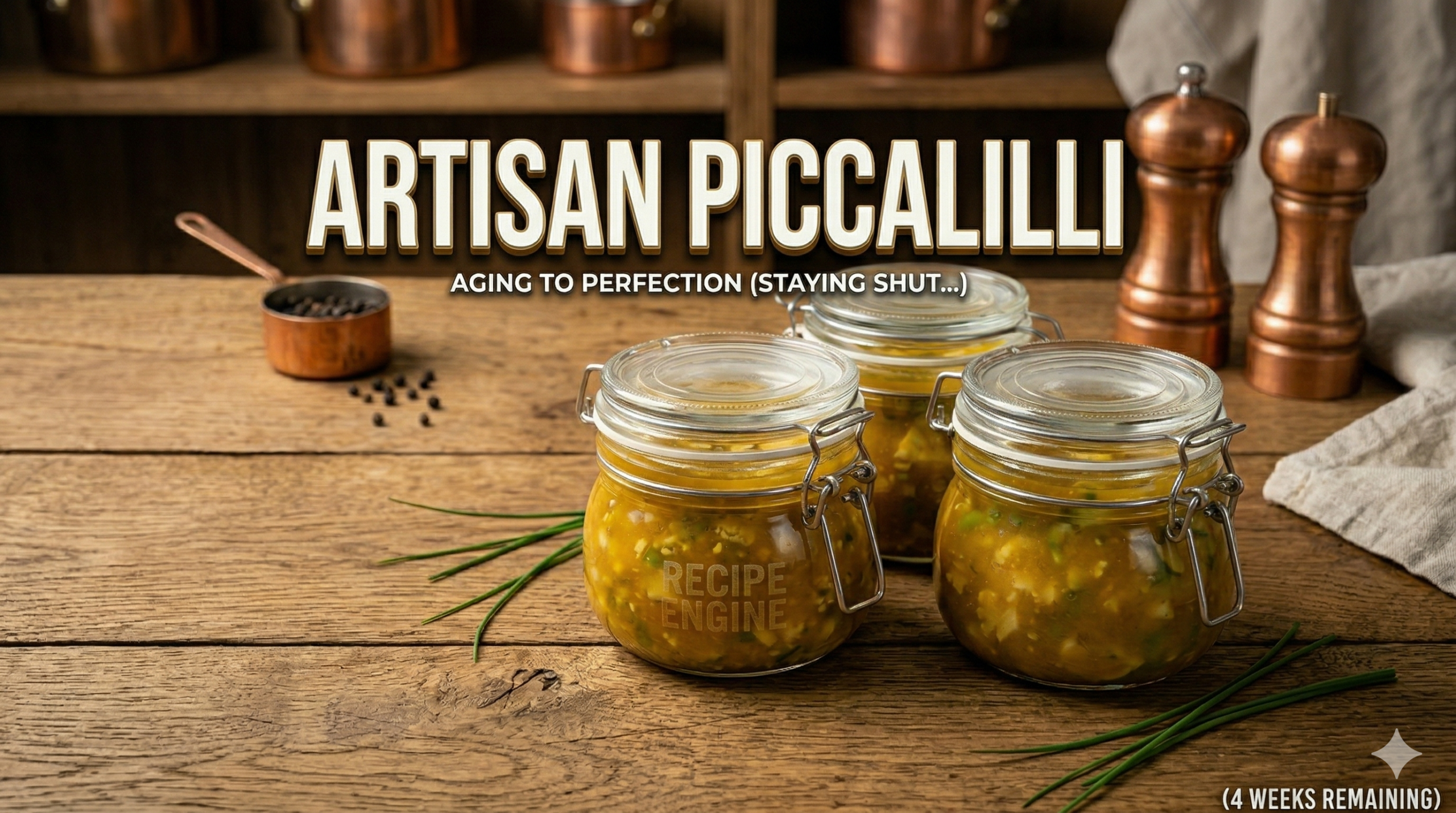
Crunchy Picalilli
Bright, punchy, and aggressively neon-yellow, piccalilli is one of Britain’s most distinctive condiments. It is an absolute powerhouse on a cold meat platter or a ploughman’s lunch, designed specifically to cut through the richness of cheddar, pork pies, and cold ham.But behind its eccentric British identity lies a fascinating story of empire, global spice routes, and a 300-year-old attempt to mimic Eastern cooking.
A Bite-Sized History
1. The British Attempt at an Indian Pickle
The story of piccalilli begins in the late 17th and early 18th centuries, as the East India Company began importing exotic, heavily spiced mango pickles from India. British palates fell in love with these vibrant, punchy flavours, but importing them was incredibly expensive.British housekeepers and cooks decided to recreate them using accessible, crunchy homegrown vegetables—like cauliflower, onions, gherkins, and radish pods—combined with imported spices.2. The Earliest Recipes
The earliest known mention of it appears in 1694 under the name "Milo-Leila" (or Mango-Lila) in a recipe book by Anne Blencowe.By the mid-18th century, it had evolved into "Indian Pickle." The legendary Hannah Glasse included a recipe for it in her famous 1747 book The Art of Cookery Made Plain and Easy. By the time the 19th century rolled around, the name had somehow mutated into the quirky word "Piccalillo" or "Piccalilli."5 Fascinating Facts About Piccalilli
The Secret to the Neon Yellow Color: That unmistakable, glowing yellow hue comes entirely from turmeric and mustard powder. Originally, British cooks used turmeric purely to mimic the golden, exotic look of authentic Indian mango pickles.The Science of the Crunch: True British piccalilli is famous for the audible "snap" of its vegetables. To achieve this, the raw, chopped vegetables (traditionally cauliflower florets, small onions, and cucumbers) are salted heavily for 24 hours before pickling. The salt draws out the excess water via osmosis, hardening the cell walls of the vegetables so they stay crisp and crunchy even after months of sitting in acidic vinegar.The Thickener Trick: Unlike standard vinegary pickles, piccalilli has a thick, glossy sauce that clings to the vegetables. This texture is achieved by mixing the spices with flour (or cornflour) and boiling it with vinegar and sugar to create a spiced gravy before folding in the salted vegetables.The American Cousin is Completely Different: If you order "piccalilli" in the United States, you won’t get a thick, bright-yellow cauliflower pickle. The American version (particularly popular in Chicago on hot dogs) is green. It is a sweet relish made primarily from finely chopped green tomatoes, cabbage, and bell peppers, with much less emphasis on turmeric and mustard.A Staple of the Industrial Working Class: During the Victorian era and the 20th century, commercial versions by brands like Haywards and Crosse & Blackwell became staples in industrial towns across the UK. It was an incredibly cheap way to inject immense flavour into a monotonous diet of plain bread, cheap cold cuts, and potatoes.The Maturation Rule: A freshly made jar of piccalilli is incredibly sharp and aggressive. It needs to sit in a dark cupboard for a minimum of 4 to 6 weeks. Over time, the harshness of the vinegar softens, the sugar mellows, and the spices infuse deep into the cauliflower cores, turning it into a complex, beautifully balanced preserve. Servings 3 Jars
Equipment
- 3 Storage Jars with Sealable lid
Ingredients
- 50 g Fine Salt
- 30 g Cornflour
- 10 g Ground tumeric
- 10 g English mustard powder
- 15 g Yellow mustard seeds
- 1 tsp Crushed cumin seeds
- 1 tsp Crushed coriander seeds
- 600 ml Cider vinegar
- 150 g Granulated sugar
- 1 Kg washed, peeled vegetables – select 5 or 6 from the following: cauliflower or romanesco cauliflower; green beans; cucumbers; courgettes; green or yellow tomatoes; tomatilloes; carrots; small silver-skinned onions or shallots; peppers; nasturtium seed pods
Instructions
Day 1
- Chop all your vegetables into small, uniform pieces. Remember, you want to fit a mixture of vegetables on a single forkful, so keep the cauliflower florets tiny.
- Place all the chopped vegetables into a large glass or ceramic bowl.
- Sprinkle the 3 tablespoons of sea salt over the veg and toss thoroughly with your hands to ensure everything is coated.
- Cover the bowl with a clean tea towel and leave it on the counter for 24 hours.
Day 2
- After 24 hours, you'll see a lot of liquid at the bottom of the bowl. Tip the vegetables into a colander and rinse them thoroughly under cold running water to wash away the excess salt. Drain them very well, then pat them dry with a clean tea towel.
- In a small bowl, combine the cornflour, mustard powder, turmeric, ginger, and cumin. Pour in about 50ml of the vinegar and whisk until it forms a smooth, lump-free paste.
- Pour the remaining vinegar, the sugar, and the mustard seeds into a large, non-reactive saucepan (stainless steel or enameled, not aluminum). Bring to a boil until the sugar dissolves. Drizzle in the spice paste, whisking constantly, and simmer gently for 3 to 4 minutes until the sauce thickens into a glossy, smooth, bright yellow gravy
- Remove the saucepan from the heat. Tip the rinsed, dried vegetables straight into the hot yellow sauce. Stir thoroughly to ensure every single floret and onion piece is completely coated.
- Spoon the hot piccalilli into warm, sterilized glass jars, ensuring there are no large air pockets. Seal immediately with vinegar-proof lids.
The Hardest Part (Maturation): Resist the urge to open a jar immediately. Fresh piccalilli tastes incredibly harsh and vinegary. Leave the jars in a cool, dark cupboard for at least 4 to 6 weeks. During this time, the sharp edges of the vinegar soften, the sugar mellows, and the spices mature into that classic, beautifully balanced British tang. Once opened, keep it in the fridge.